How to correctly calculate the amount of food and drinks per guest
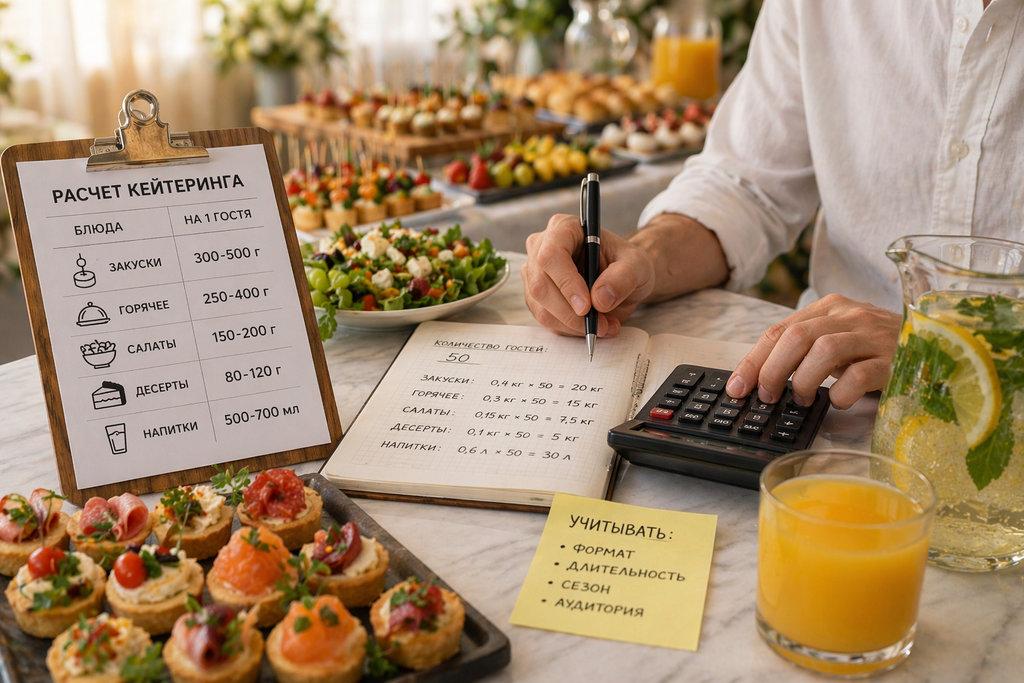
Planning food is an essential part of any event, where it is important to balance sufficient portions with a reasonable budget. An experienced catering company uses proven standards to ensure every guest is satisfied. Professional catering helps organize the process according to the format and duration of the event while maintaining a high level of service.
A proper calculation begins with understanding the structure of the event and audience expectations. Once the format is defined, it becomes easier to balance the menu and estimate drinks. This is especially important for off-site catering, where resources are limited. As a result, the client receives a clear plan without unnecessary expenses.
Basic standards: how much food is needed per person
Portions depend on the type and duration of the event. Catering services require different approaches: short events need lighter options, while long events require full meals. For example, a coffee break includes minimal portions, while a banquet requires a wider selection. Standard guidelines are as follows:
- Coffee break: 300–400 g per person;
- Buffet: 600–800 g with light appetizers;
- Banquet: 1200–1500 g including hot dishes;
- Long events: up to 1800 g;
- Buffet or cocktail format: 500–700 g.
These standards help determine the required volume in advance and avoid shortages. At the same time, menu variety and presentation style remain important.
Banquet vs buffet: differences in menu calculation
Different formats require different approaches. Banquet catering предполагает seated service with structured courses, while buffet formats allow guests to move freely, making variety essential.
If you plan a buffet, it is recommended to increase the number of small portions. This format focuses on light dishes and drinks, making the event more dynamic.
In a banquet format, calculations are more precise since each guest receives an individual portion. This is especially important for weddings and formal events.
Key factors affecting volume
Several factors influence calculations. Seasonality matters: in summer, BBQ and picnic formats are popular, while in winter, heavier meals are preferred. Guest composition and event type also play a role. Key factors include:
- season and weather;
- guest profile;
- event duration;
- activity format;
- availability of beverages.
These factors affect the overall catering cost. Proper planning helps optimize expenses while maintaining quality.
Budget and final cost per guest
The final cost depends on menu complexity and volume. Catering price per person in Tashkent is formed based on logistics, service level, and menu composition.
Accurate calculations help avoid overpaying while maintaining quality. As a result, clients receive a balanced and комфортное решение для гостей.